

Blog
Can You Become an Actuary Without Maths Background?


In this guide, we explain how the IAI, the IFoA and the SOA treat students from non-maths backgrounds, how much maths you actually need, how commerce students can start after Class 12, and how to prepare with live actuarial science classes online from anywhere in India.
Quick answer: Yes, you can begin actuarial science without a maths background, but you cannot avoid maths altogether. The IFoA has no entrance exam, the SOA has no actuarial degree requirement, and the IAI’s ACET is open after Class 12. The exams still test probability, statistics and financial maths, which you can learn step by step.
Can You Become an Actuary Without Maths Background?:
Actuarial Science Without Maths: What Does It Really Mean?
Here is how the main maths areas map to what you can learn from scratch:
| Maths Area | Where It Appears | Can You Learn It From Scratch? |
|---|---|---|
| Probability | ACET, SOA Exam P, IFoA CS1 | Yes, with a structured start |
| Statistics and data analysis | ACET, IFoA CS1 and CS2 | Yes, with regular practice |
| Algebra and calculus basics | ACET, IFoA CM1 | Yes, at Class 11-12 level to begin with |
| Financial mathematics | SOA Exam FM, IFoA CM1 | Yes, and commerce students often find the finance context familiar |
New to the profession? Our page on what is actuarial science explains the basics.
Actuarial Science and Mathematics: How Much Maths Do You Really Need?
The IFoA Core Principles papers show where the maths sits:
| Subject | Paper | Main Focus |
|---|---|---|
| CS1 | Actuarial Statistics | Probability, statistics and data analysis |
| CS2 | Risk Modelling and Survival Analysis | Stochastic models and survival analysis |
| CM1 | Actuarial Mathematics | Interest, annuities and life contingencies |
| CM2 | Financial Engineering and Loss Reserving | Financial models and claims reserving |
| CB1 | Business Finance | Corporate finance and valuation |
| CB2 | Business Economics | Economic principles for business decisions |
CB1 and CB2 focus on finance and economics, so they can be a gentler starting point for commerce students. Our CB1 and CB2 preparation strategy shows how to approach them. You can see every paper on our actuarial science subjects page.
Can I Do Actuarial Science After 12th Commerce Without Maths?
If you are a commerce student, here is a practical way to start:
- Strengthen your basics: revise Class 11-12 algebra, functions, basic calculus, probability and statistics.
- Consider PARP: the Pre-Actuarial Refresher Program at The Academic Junction (TAJ) is designed to rebuild the mathematical, statistical, and analytical foundations before you begin actuarial papers.
- Prepare for ACET: read our ACET complete guide and the ACET preparation plan.
- Explore alternatives: if you prefer to skip an entrance test, the IFoA lets you start without one. Our IFoA exam exemptions guide explains how qualifications can reduce the number of exams.
Watch our orientation playlist on actuarial science after class 12th for more guidance.
Society of Actuaries (SOA): Can a Non-Maths Student Become an SOA Actuary?
The three VEE topics are Economics, Accounting and Finance, and Mathematical Statistics. Commerce students may find Economics and Accounting and Finance familiar, while Exam P needs focused probability practice. Most SOA candidates come from maths-focused majors, so plan extra time if your background is different.
TAJ coaches SOA papers through live online and classroom batches. Explore our Society of Actuaries (SOA) page
IAI vs IFoA vs SOA: Which Path Suits Students Weak in Maths?
| IAI (India) | IFoA (UK) | SOA (US) | |
|---|---|---|---|
| Entry | ACET, or direct entry for certain qualifications | No entrance exam | No actuarial degree requirement |
| First step | ACET, then student membership | CS1 or CM1 can be sat as a non-member | Exam P and Exam FM, plus VEE topics |
| Maths at the start | Class 11-12 level maths and statistics | Applied statistics and actuarial mathematics | Probability and financial mathematics |
Learn more about each body on our pages for the Institute of Actuaries of India (IAI) and the Institute and Faculty of Actuaries (IFoA). IAI direct entry criteria can change, so check the latest requirements before applying.
How to Start Actuarial Science Without a Maths Background: 6 Steps
Rebuild your maths foundation. Revise algebra, calculus basics, probability and statistics, or join a refresher such as PARP.
Clear the entry step. Prepare for ACET if you are choosing the IAI route, or register as a student member if you are choosing the IFoA.
Start with a manageable paper. Many students begin with CB1, CB2 or CS1, depending on their background.
Learn Excel and basic coding. These tools support actuarial work, as explained in our guide to essential skills every actuary needs.
Study with structure. Join coaching with live classes, mock tests and doubt-solving so you stay consistent.
For a full career roadmap, read how to become an actuary in India.
Actuarial Science Classes Online: Learn From Anywhere in India
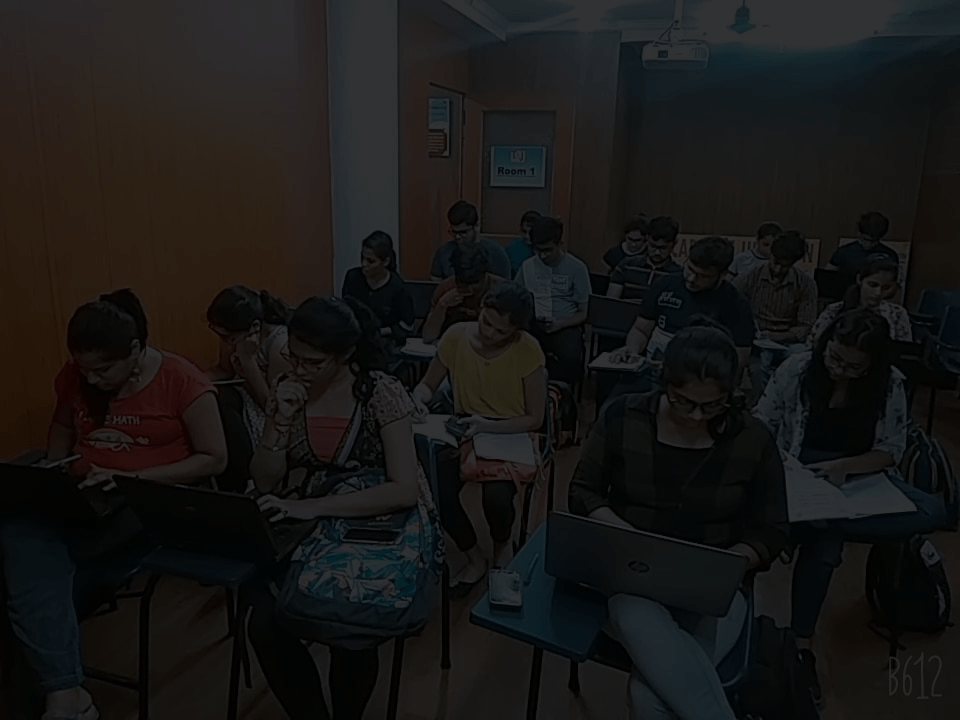
TAJ has mentored 10,000+ students and holds a 4.8 Google rating from 431+ reviews. We offer live online and classroom-based coaching across India, with classroom centres in Delhi and Mumbai. Here is what we cover:
| Qualification | What TAJ Coaches |
|---|---|
| IAI | ACET and IAI exam preparation |
| Foundation | Pre-Actuarial Refresher Program (PARP) |
| IFoA | CS1, CS2, CM1, CM2, CB1, CB2, CP1, CP2, CP3, SP1, SP2, SP4, SP5, SP7, SP8 and SA2 |
| SOA | SOA papers, including Exam P and Exam FM |
Our IFoA coaching includes the Specialist Principles subjects SP1 (Health and Care Principles), SP2 (Life Insurance Principles), SP4 (Pensions and Other Benefits Principles), SP5 (Investment and Finance Principles), SP7 (General Insurance Reserving and Capital Modelling Principles) and SP8 (General Insurance Pricing Principles), plus SA2 (Life Insurance Advanced).
Prefer a classroom? Explore our actuarial science coaching in Mumbai and Delhi. Try a free demo lecture before you enrol, and see our combo courses for better value across subjects.
Strengths Non-Maths Students Bring to Actuarial Science
- Commerce and accounting students understand financial statements, which helps in finance-heavy papers and insurance roles.
- Economics students are comfortable interpreting data and explaining trends.
- Management and BBA graduates understand business decisions and can communicate findings clearly to non-technical teams.
These strengths matter because employers value actuaries who can explain complex models in simple terms. See the demand for actuaries in India and our actuarial science placements page to understand where the career can lead.
Final Thoughts
Admissions are open for the April/May 2027 actuarial exams. Book a free counselling session or download our free brochure to plan your first step.
Frequently Asked Questions
You need Class 11-12 level algebra, calculus basics, probability and statistics to start. In papers like CM1, actuarial mathematics covers interest theory, life tables and survival models. Most of it is applied maths, which you can learn with consistent practice.